Seed Collection Stories 2026: Good Times in a Strange Year
by Benjamin Brunt - EPA Farmer to Farmer Crew
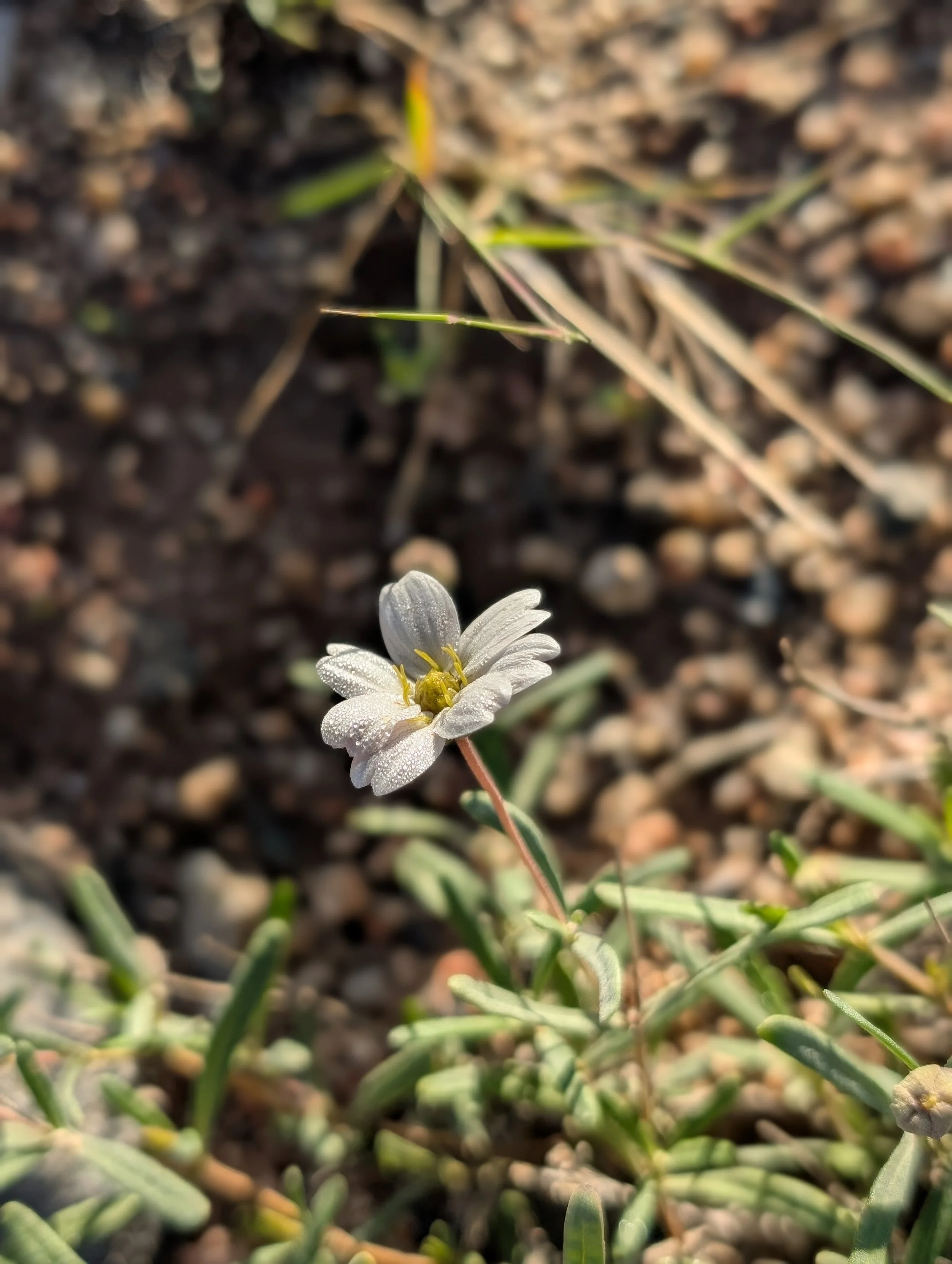
Melampodium leucanthum blooming in October.
The summer season of 2026 cannot be said by any extent of the imagination to be a normal year. My team and I were hired by the Institute for Applied Ecology in May of this year for a unique project, the Native Crop Toolkit, funded by the Environmental Protection Agency. The goal was to link conventional agricultural practices with native plants to create four native crop tools (native cover crops, native seed production fields, native pollinator hedgerows, on-farm habitat restoration). These tools were designed to further conservation efforts on working lands and benefit local farmers. The first step was to source the native seeds that would be used to implement the tools on participating farms. Through the entire process, we felt the impact of a changing environment.
The previous year’s lack of moisture and minimal snow pack, combined with an early heatwave in June, left plants across the state stunted and shriveled, barely hanging on. The Rio Grande dried up, the lack of snow and agricultural water usage leaving miles of the river completely dry for months. It was not a good year for seed collection. Again and again, my seed crew and I faced disappointment when we searched an area that had in previous years shown promise, only to find nothing remaining, or a few desperate individuals. Worse still, some populations that seemed to be thriving despite the dire conditions did not make it through more direct human intervention. Discovering that one of our populations had been mowed is a fairly common experience among the seed crews at the Institute for Applied Ecology, especially near more urban areas. However, seeing our population of Sphaeralcea, one of the few plants that seemed to be growing tall and blooming in July, mowed to the ground and uprooted to make way for the bare earth and invasive Russian Thistle was a much greater blow this year than it might have otherwise been.
It takes a toll on you. The impact on the environment from a warming planet is more visible than ever this year, and it is now even more important to maintain a positive attitude. That sounds pretty cliché, but the feeling of fighting a losing battle creeps into all of our conservation work. There's a sense that has been expressed by members of my crew, and myself on multiple occasions, that what we are doing isn't enough, that what we are doing won't stop the changing world. That is why it is so important, I think, to focus on the moments of surprise, of joy and discovery. In a year as severe as this one, the moments when you do find something living and beautiful become all the more powerful. My crew has had plenty of these moments, despite the small amount of collections we have managed to make. The first time we travelled to El Malpaís National Monument, we came around the last bend in the road, called the Narrows as it winds just in between the sandstone bluffs on one side and the lava fields on the other, and we came upon a valley filled from one end to the other in tall yellow flowers, as far as the eye could see and father, in fact. The yellow flower, Verbesina encelioides, is a flower that blooms later in the season, and had survived the early onslaught of heat and drought. Even with the rains coming late, the area had become lush with tall healthy grasses and wildflowers. Just one experience such as that is always good to remember in the face of hopelessness. To give up trying to make a difference ensures no other outcome.
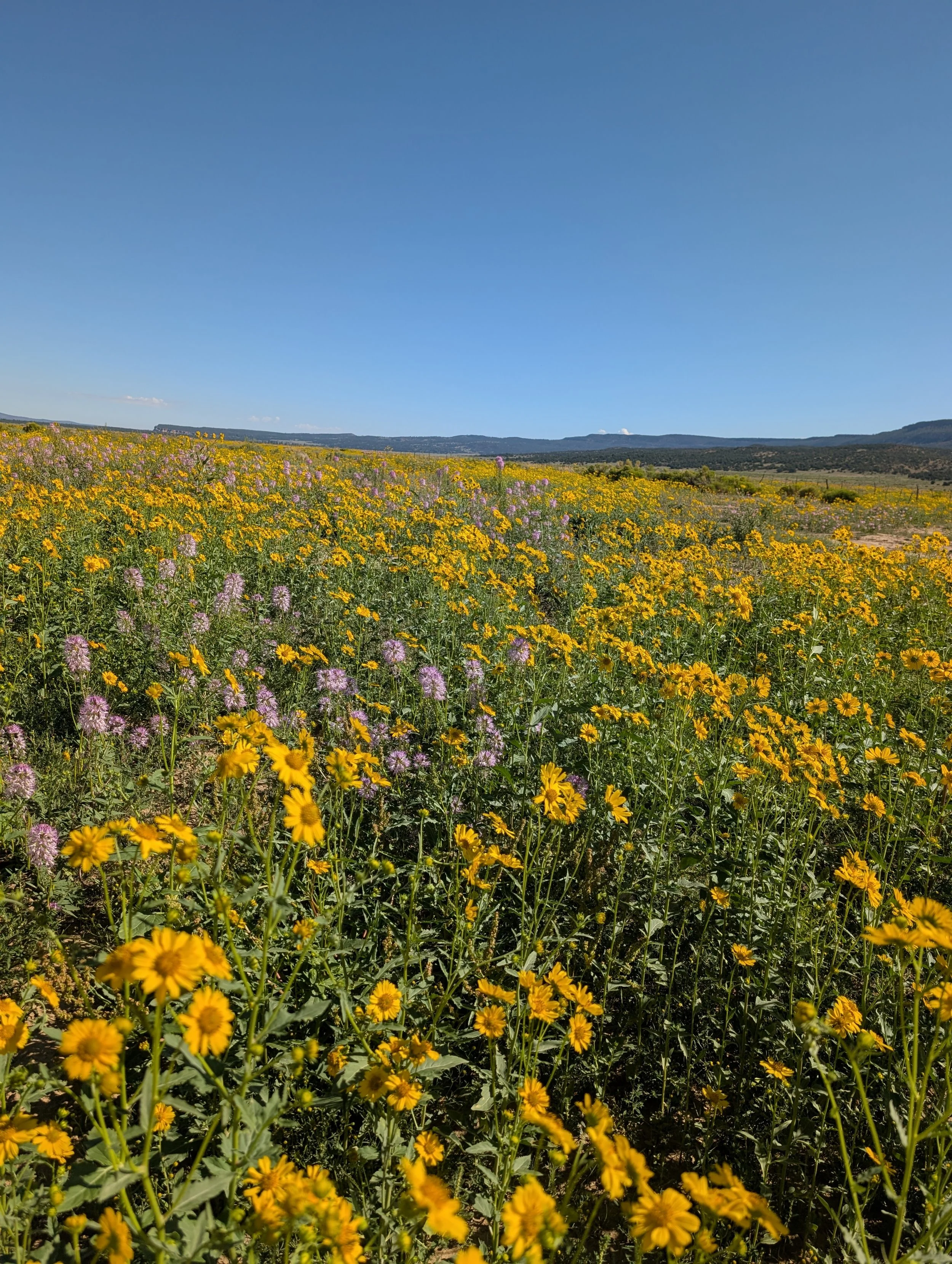
Fields of flowers in El Malpaís National Monument
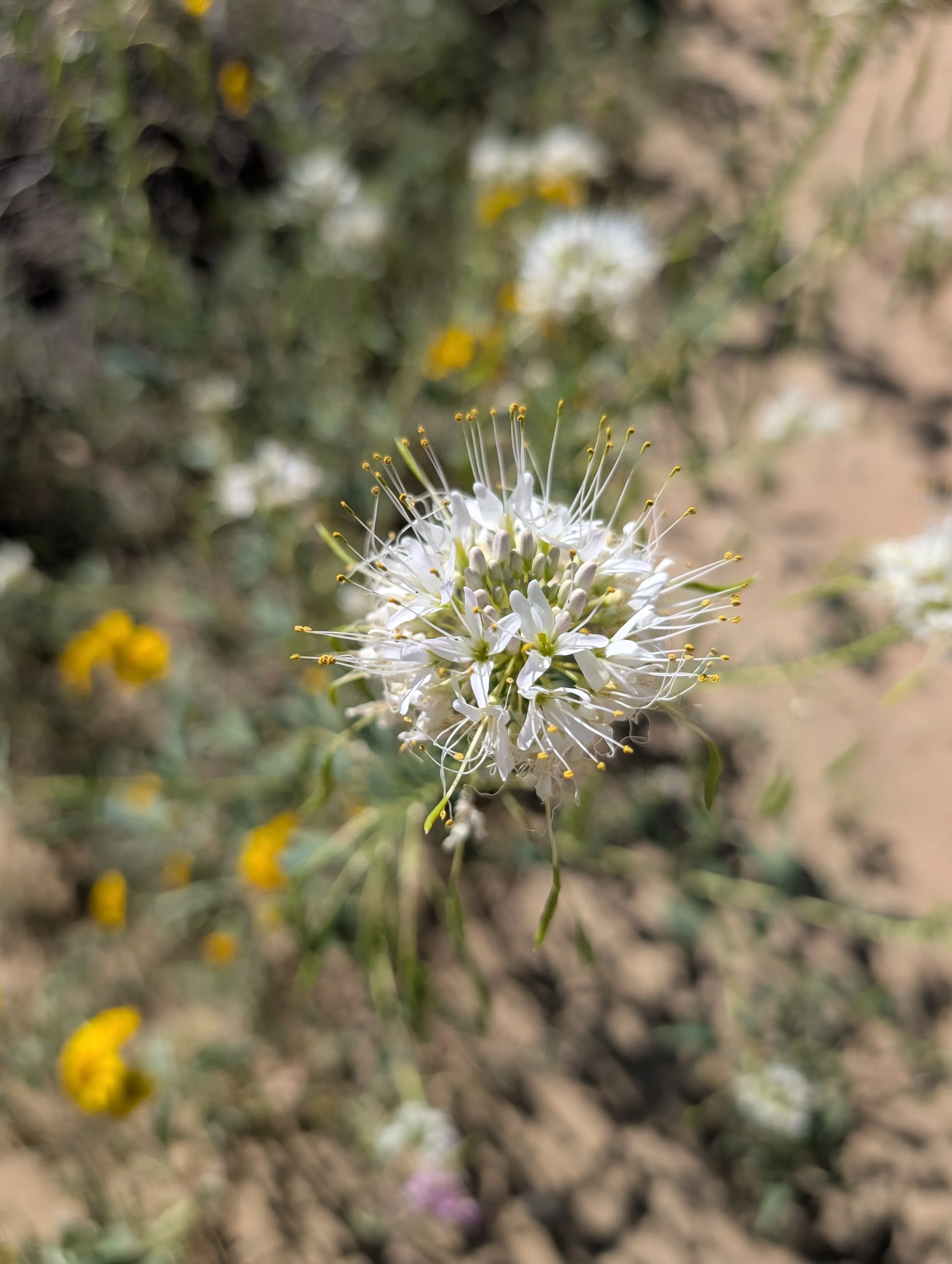
An albino specimen of Rocky Mountain Bee Plant.
Despite this wealth of flowering plants, the return to normalcy was only a brief respite. Less than three weeks from our trip to the Monument, the floodgates opened, so to speak. The rain came, at long last, and did not stop. It rained continuously for a week straight, and the river’s water level rose from a record low to a record high overnight. This fact came as a relief from the heat, but also with some consternation for us. The rain made it impossible for us to work on any of the farms that we had planned to implement tools from the native crop toolkit. Usually, when the agricultural sector of our job is delayed, our crew can always resort to seed collection, as rarely do conditions interact with both. However, the extent of the rain complicated things greatly. Collecting seed in the rain is difficult from a technical standpoint, but the main issue turned out to be accessibility. The mud and rain made it impossible to work in the fields, and also rendered travelling to our plant populations prohibitively difficult, as most of them were off the beaten path. Even this complication could be linked to the changing environment, as the harsh conditions earlier in the year had pushed us far-a-field to find what plants had survived in disparate places. After a series of multiple delays, spanning weeks in which we had planned to work, we had to rush almost desperately to finish our planned projects before the first freeze. We had just barely made it, with a massive cold front on the horizon and the possibility of the first freeze merely days away. Our seed collection had fallen by the wayside in the rush, with only a few collections over the course of several months, a fact that served to counterbalance the relief of the broken drought.
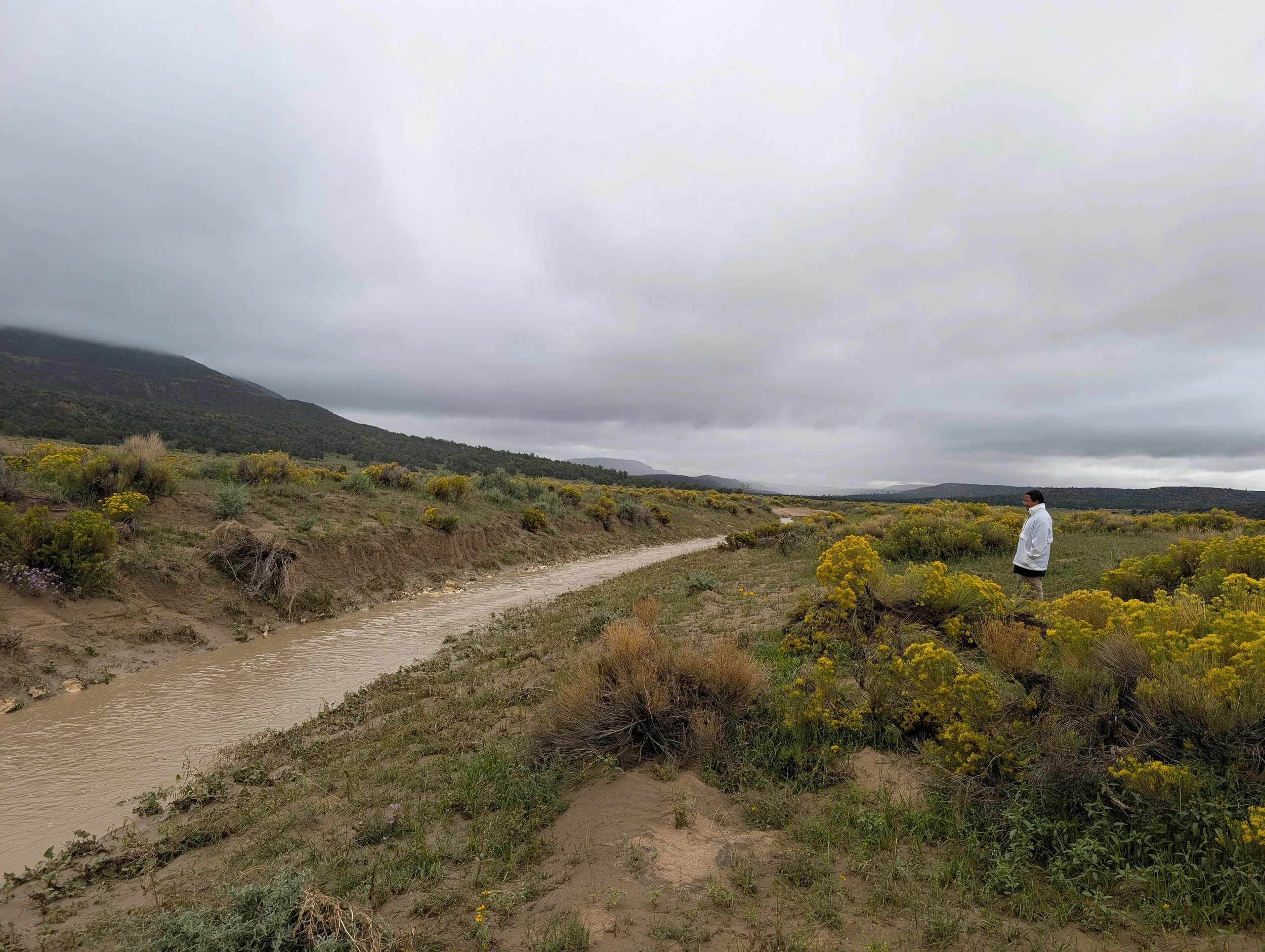
A new river blocking our path in El Malpaís National Monument
Especially as we come into an even stranger part of the year, with late monsoons, rapidly cooling temperatures, and a warm ocean current that is showing no signs of stopping, this is even more important to remember. The plants are just starting to bud out again with rain, as if a second growing season had just sprung up. But with November just around the corner, there is no guarantee that any of the plants we are seeing will make it to seed. The first frost could be months away, or it could be in just a few weeks. Working with the Native Crop Toolkit this year has allowed me to experience firsthand the uncertainty of the times we are entering into. It’s unprecedented, and that makes the work all of us who are in conservation do all the more important.