Seed Collection Stories 2026: Seeds, Soil, and the People Who Have Always Been Here
by Carlos Pérez - EPA Farmer to Farmer Crew
Being a part of the Environmental Protection Agency (EPA) crew at the Institute for Applied Ecology (IAE) and implementing the Native Crop Toolkit was a transformative opportunity as I’ve never directly been involved with conservation. Exploring New Mexico, searching for plants and participating in educational and community outreach with our Indigenous communities gave me a better understanding and deep appreciation for the native plants in our beautiful state. New Mexico has a rich history of being a place where many different peoples congregated and exchanged culture for countless generations. Indigenous people in this region have a recorded history extending back more than 12,000 years. However, many Pueblos have attributed their respective presence since time immemorial. As a member of Acoma Pueblo, I carry this sentiment with me in every facet of my life.
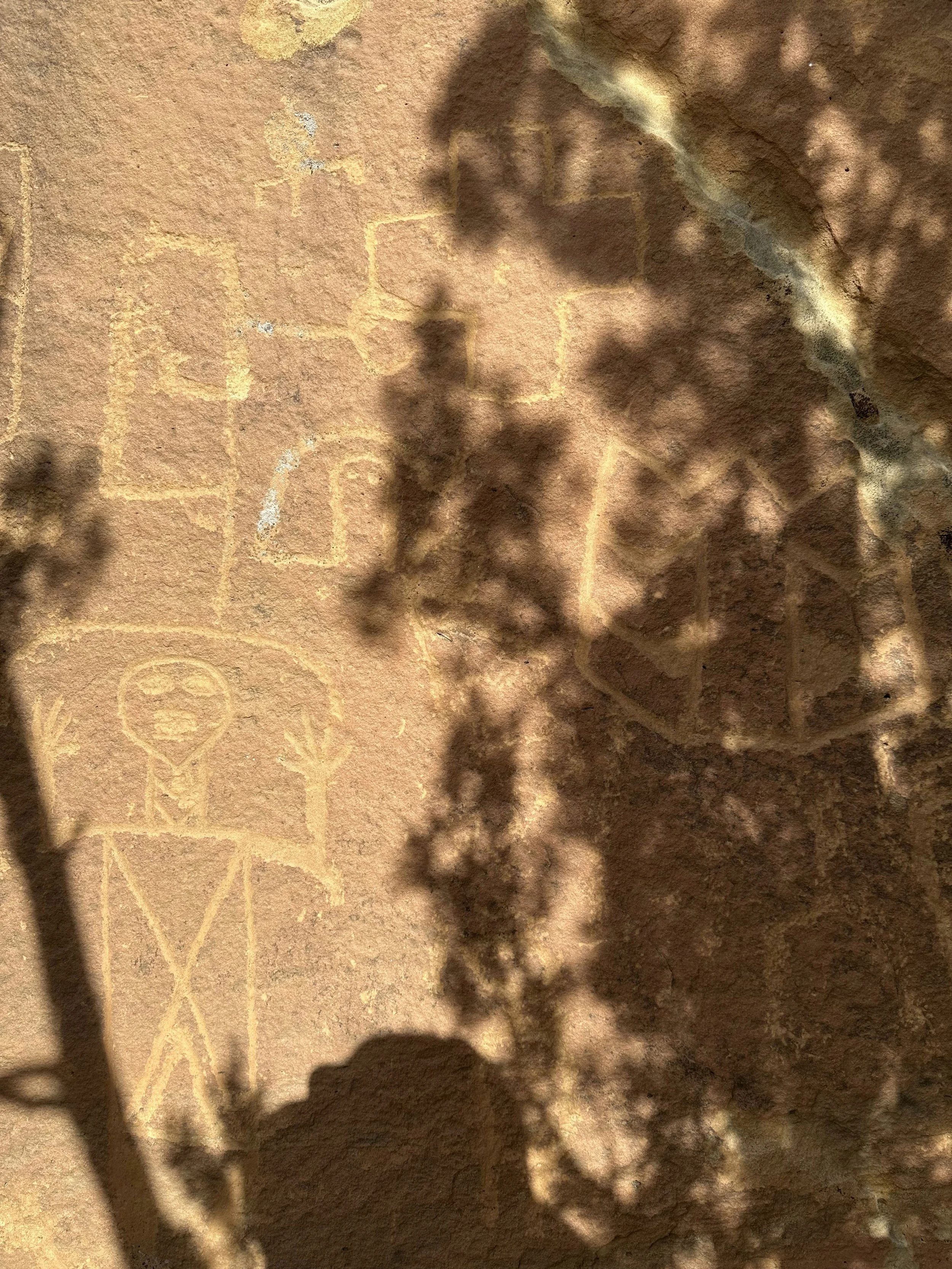
Petroglyphs near San Fidel in Petroglyph National Park.
The Native Crop Toolkit utilizes four distinct tools: Pollinator Hedgerows, Native Cover Crops, On-Farm Restoration, and Native Seed Production Fields to increase dryland farming resilience, protect the Rio Grande Watershed, and create a diverse and healthy ecosystem. My first role in the project was to collect seeds of native plants that could be used in each of these tools. Our crew’s journey began in May 2026 and we were met with an immediate challenge: a dry winter left no water for our target seed collection species! As each month passed, our crew traversed the parched landscape, persevering through abnormally high temperatures and working tirelessly to scout, collect, and catalogue our native seeds. The final two weeks of September brought an atmospheric surge of deep subtropical and eastern Pacific tropical moisture. The delayed monsoon season was pushed into overdrive and New Mexico was suddenly inundated with rainfall. It was disheartening seeing the effects that the floods had in our communities and on many of the plant populations we had scouted which were washed away. Our crew continued to adapt. One of my favorite collections that we were able to make from our target species list was Dalea purpurea (Purple Prairie Clover) at the Rio Vista Park in Santa Fe. Its ability to fix atmospheric nitrogen into plant-available forms, its enrichment of degraded soils without chemical fertilizers, and its pollinator support is fascinating. Collecting seeds of this species is incredibly satisfying as well. After blooming, the entire spike dries into a rigid, grayish cone and you simply pull them off into the palm of your hand.
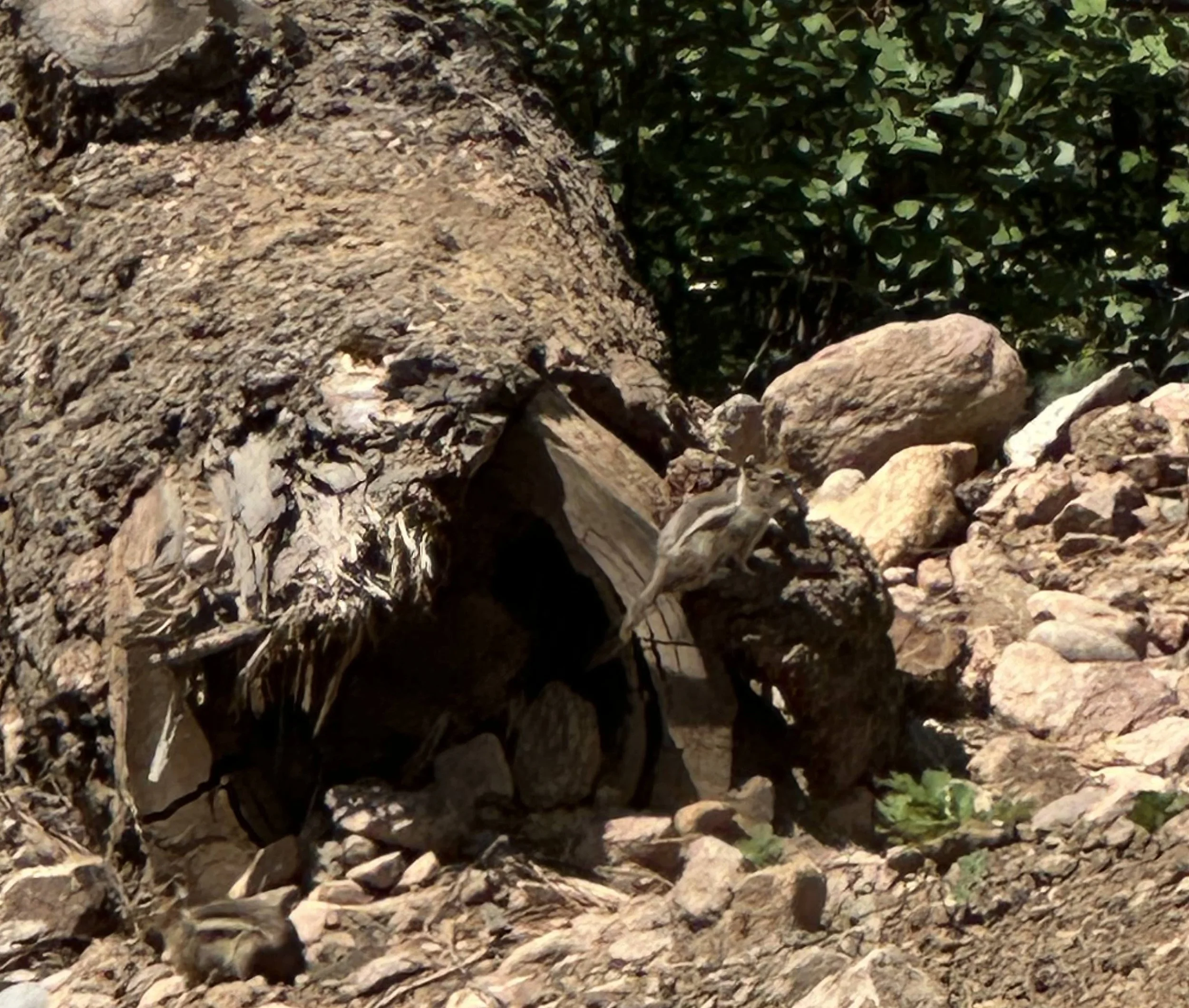
Chipmunk found during Forest Bound Tewa Session in Hyde Park, New Mexico. It was stalking our campsite for vegetable scraps.
In addition to seed collection, I had other opportunities to be in community with the rest of our relatives. During the summer, I worked on an educational outreach project called Forest Bound with IAE’s Educational Outreach Coordinator, Tanner Johnson. There we worked with youth from the Pueblo of Pojoaque to introduce ecological curriculum in tandem with language revitalization teachers and elders. We conducted a medicinal plants workshop with one of my relatives, a plant walk, flower dissection, and Tewa language activities.
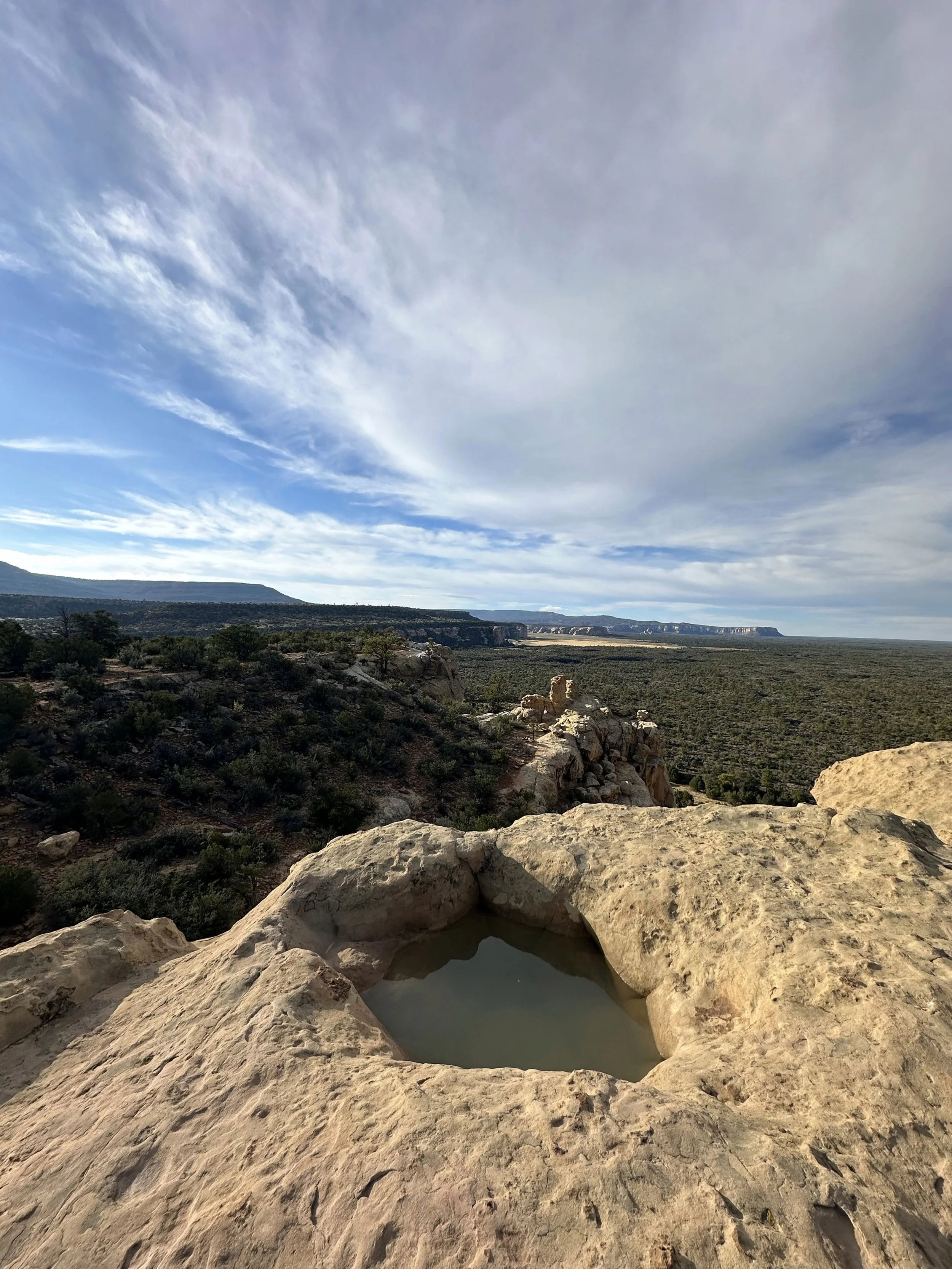
Sandstone Bluffs in El Malpaís National Monument. It is approximately 15 miles from my Pueblo across rugged desert terrain, mesas, and tribal lands.
After this opportunity, I wanted to continue our outreach to other tribes. This October, I attended the Intertribal Gathering of Hope hosted at the Pueblo of Isleta. I networked with Native farmers from all over the state and helped facilitate an educational workshop with students from Isleta Pueblo and Los Lunas. The elders at the event advised the youth on the importance of hope in the face of adversity and to continue their curiosity of their environment so that they return to serve their communities. Ecology provides the knowledge of how life persists, and conservation acts on that knowledge with hope. Both work to ensure that land and community can heal, adapt, and thrive together. As our season winds down, I am very grateful to the Institute for Applied Ecology for the opportunity to benefit our environment and local communities through this work.
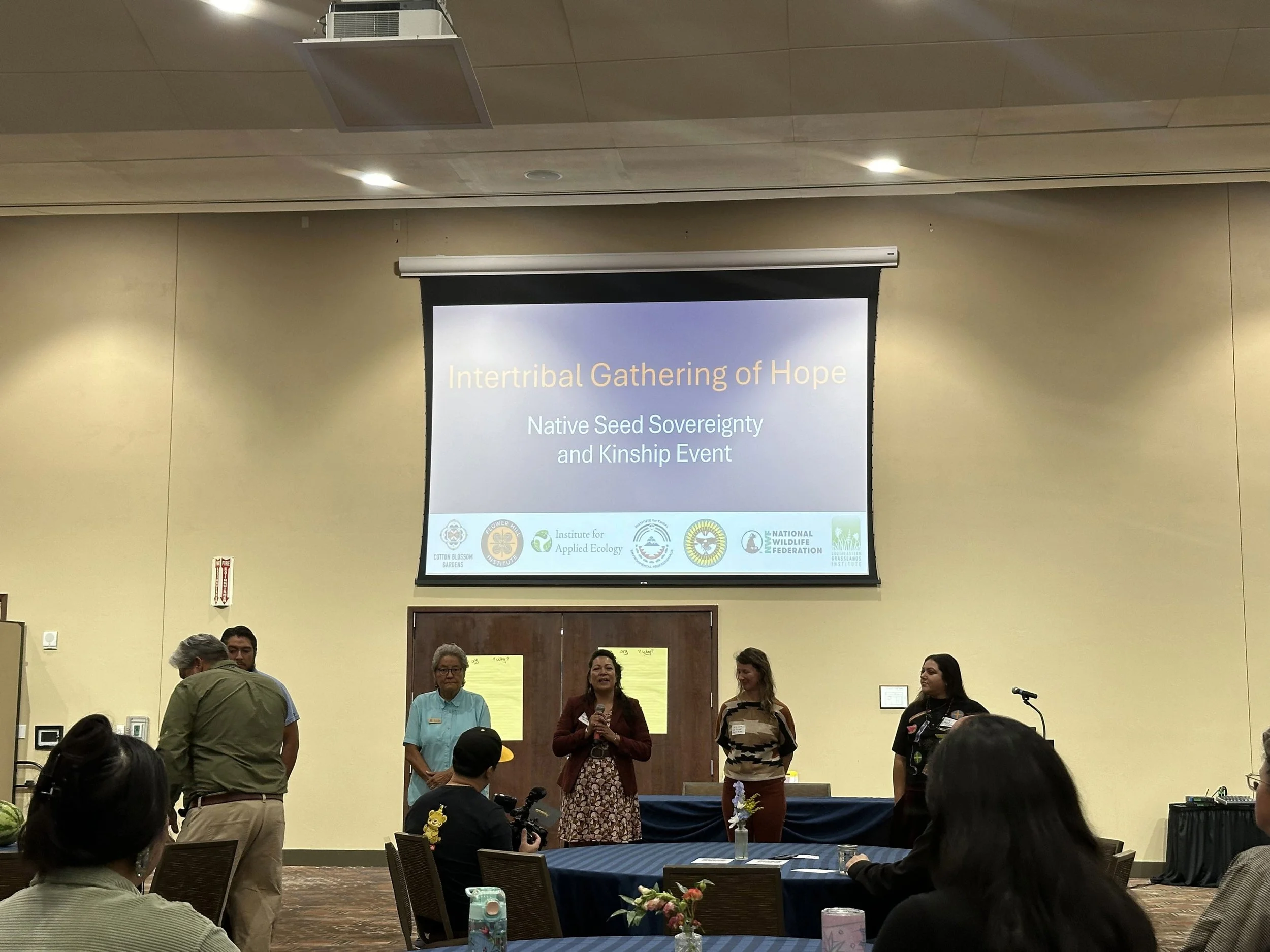
Intertribal Gathering of Hope hosted on the Pueblo of Isleta. Day one was filled with introductions and a water blessing ceremony.